
- PARENT SUPPORT AND EMOTIONAL CONNECTION PROGRAMMES
Big Feelings Don't Have to Pull You Apart
The Hideout Singapore supports parents and children through practical emotional tools, guided activities, and meaningful conversations — whether you’re adjusting to life with a baby, supporting a young child through big feelings, or learning to communicate better as a family.
- Small-group sessions
- Practical guidance
- Support for different stages of parenthood

THE PART EVERY PARENT RECOGNISES
You Love Your Child. But Some Moments Are Hard.
You may try comforting, correcting, or reasoning — but nothing seems to work in that moment. This does not mean you are failing.
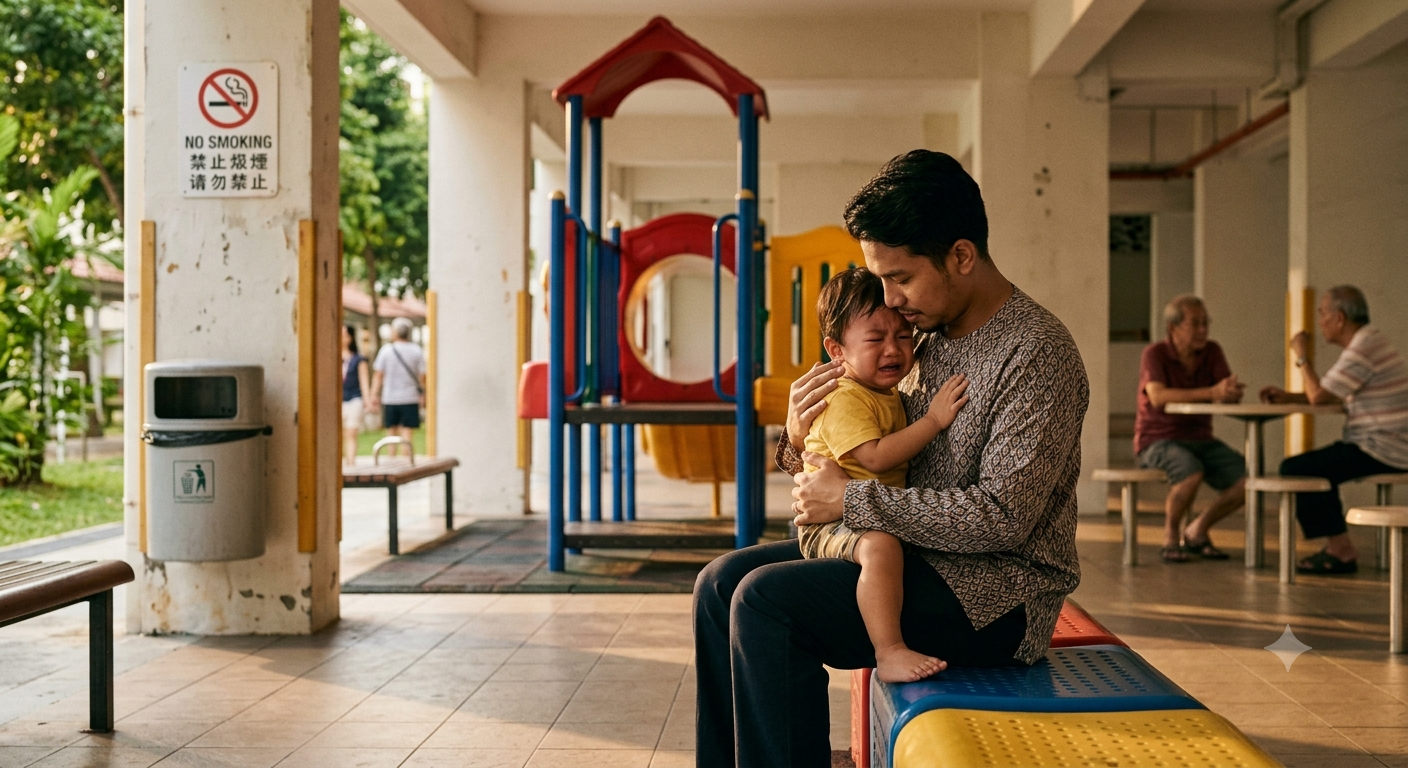
NEWBORN - TODDLER
Your baby may cry and you're unsure what they need. Your toddler may cling, refuse, or become overwhelmed.
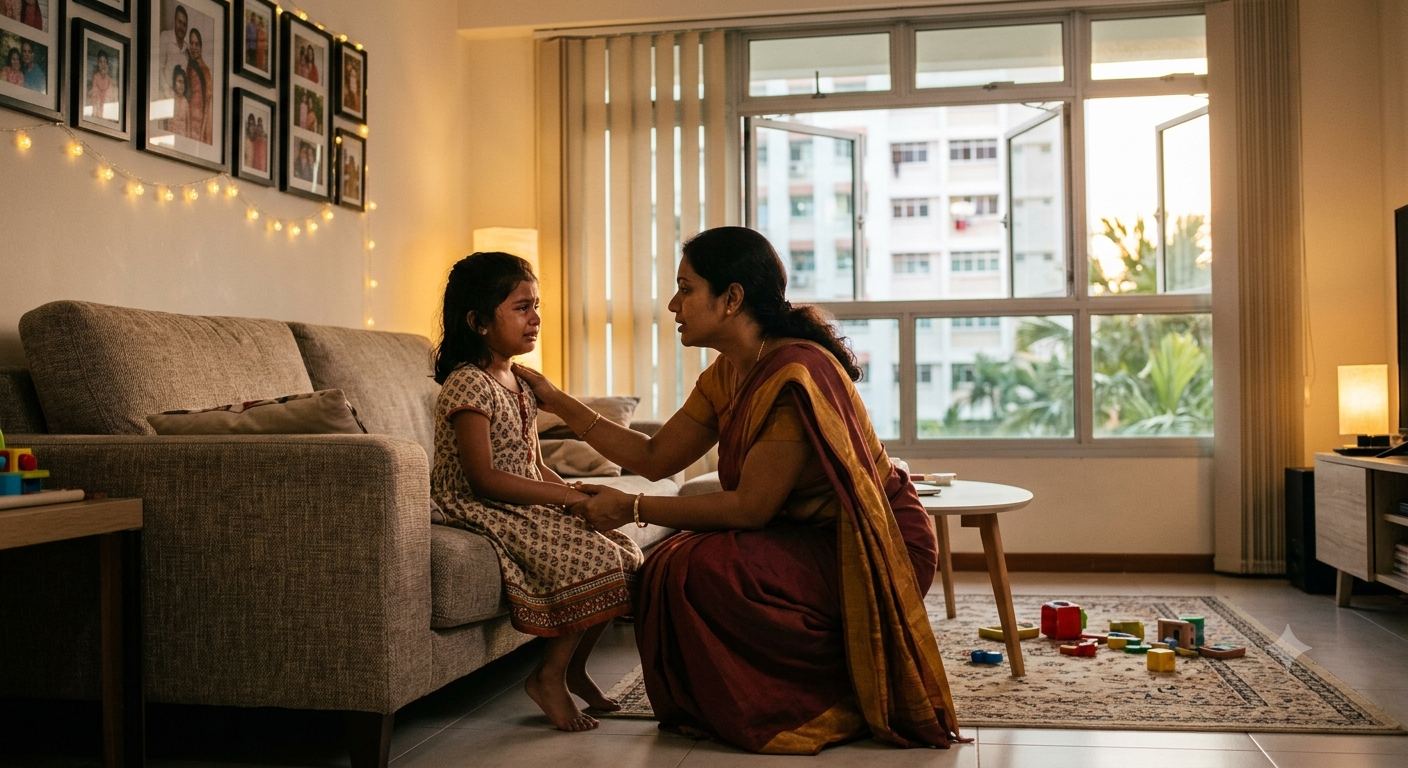
YOUNG CHILD
Big feelings show up as tantrums, refusal, or shutting down — often faster than you can find the right words.
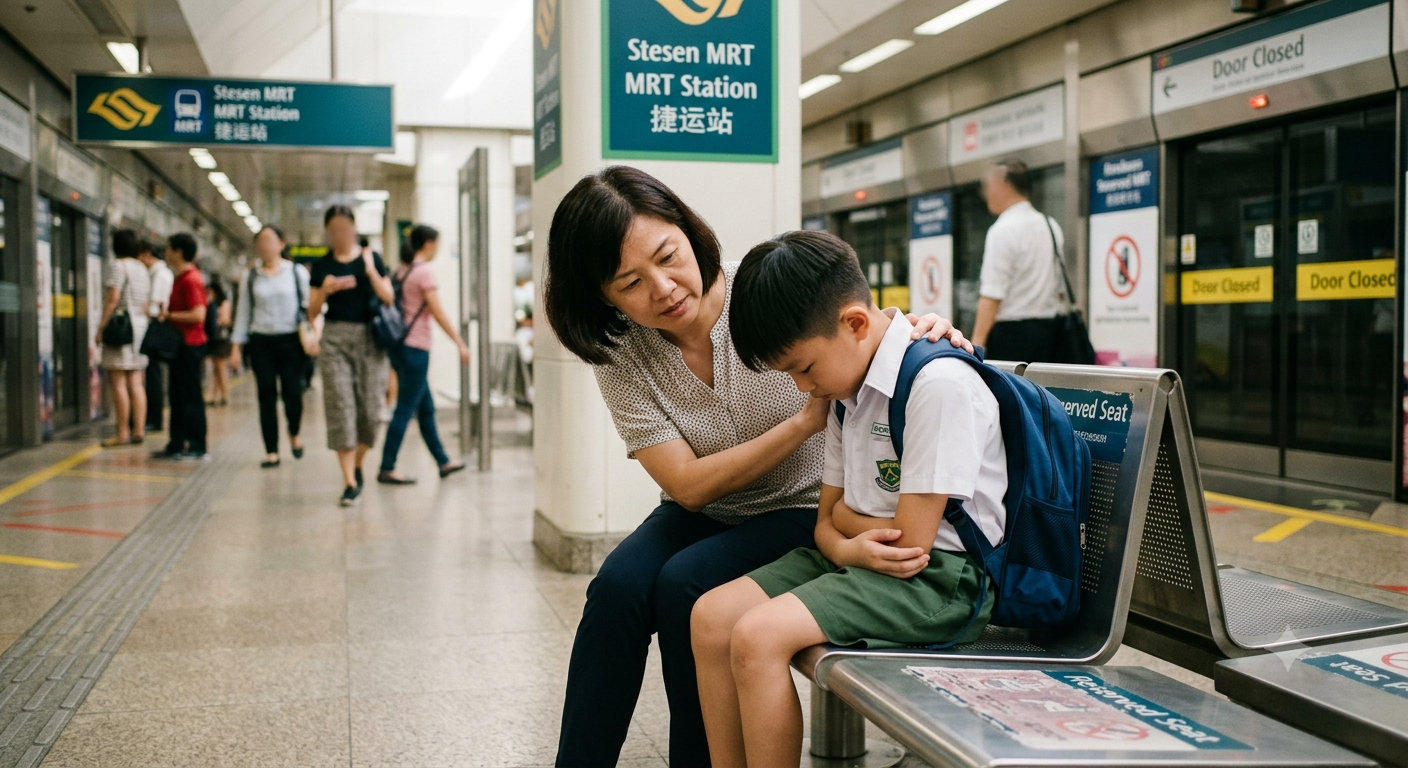
OLDER CHILD
Your older child may shout, withdraw, or struggle to explain how they feel, even when you ask gently.
Sometimes, both parent and child simply need a different way to pause, understand what’s happening, and reconnect. At The Hideout Singapore, we help parents look beyond behaviour, recognise emotional needs, and respond with greater confidence.
WHY THIS MATTERS, BACKED BY RESEARCH
It’s Not Just About Who Cares for Your Child — It’s How You Respond
A 2026 Singapore study by A*STAR and NUS Medicine followed 2,580 local families and found something worth sitting with.
2,580
Singapore families followed by A*STAR’s Institute for Human Development and Potential and NUS Medicine, tracking children cared for by parents, relatives, helpers, or infant care in their first 18 months.
Source: Child Development journal, A*STAR IHDP & NUS Yong Loo Lin School of Medicine — read the article
Higher stress
Parents whose children were cared for by others in infancy reported higher parenting stress by preschool — and were more likely to rely on scolding or other punitive discipline.
Source: same study, 2018–2021 survey rounds — read the article
The real link
It was parental stress and harsher discipline — not the caregiving arrangement itself — that researchers linked most closely to children’s behavioural difficulties.
Source: same study, 2018–2021 survey rounds — read the article
35-40 hrs
NUS researchers tracking 2,452 Singapore children found this weekly range of centre-based childcare was the “sweet spot” — beyond it, kids showed more stress and weaker self-regulation, and parent-child bonding time was squeezed out.
Source: Bi, Ding & Yeung, Early Childhood Research Quarterly(2024), via NUS FASS Singapore Research Nexus — read the article
In other words — whether it’s you, a grandparent, or a helper doing the day-to-day care, what shapes your child most is how the adults around them handle their own stress. That’s exactly where this workshop starts.
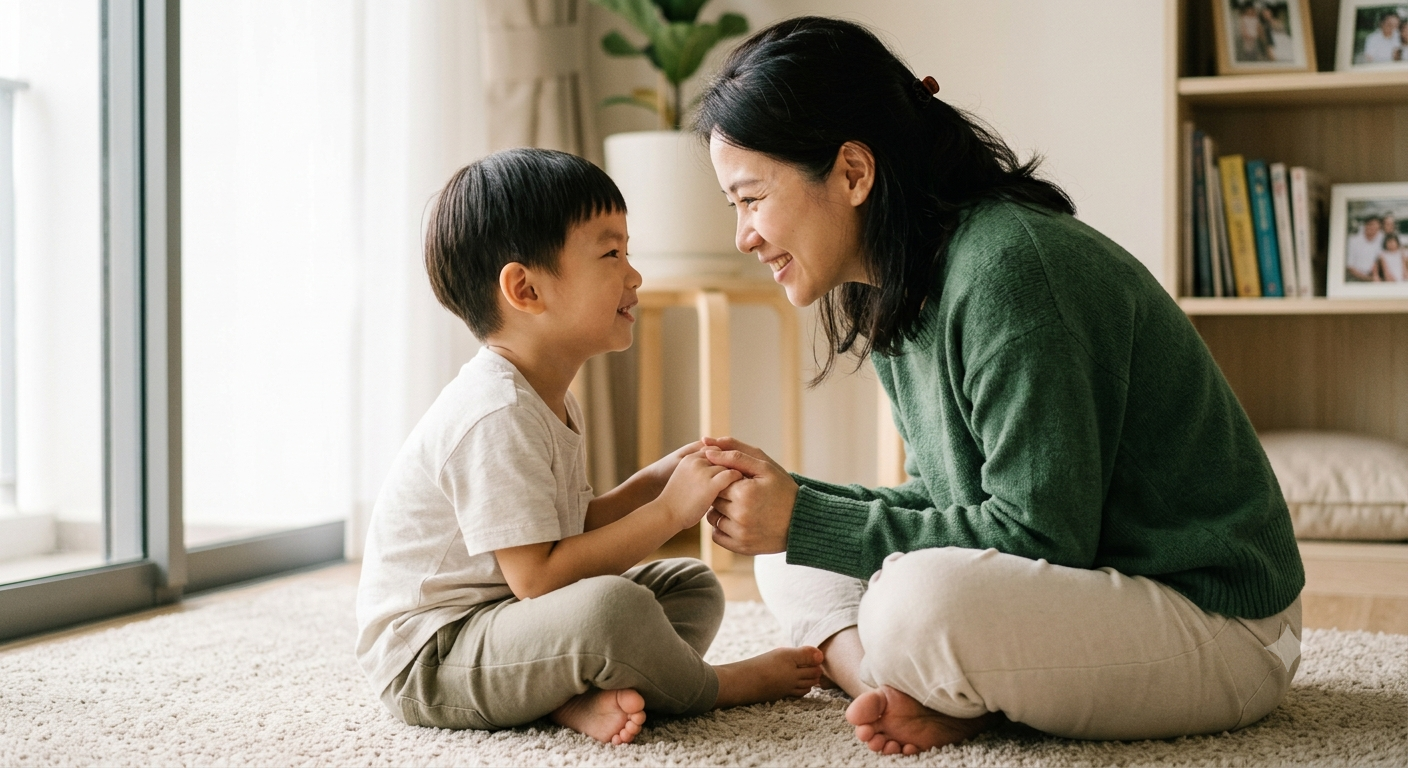
OUR APPROACH
Understand. Connect. Respond.
OUR PROGRAMMES
Support for Different Stages of Parenthood
Every stage brings different emotional, developmental, and parenting needs. Our programmes are designed separately so your family gets support suited to where you are right now.
S$15 / adult 60 minutes · child attendance optional
S$25 / pair 90 minutes · max 8 pairs
S$25 / pair 90 minutes · max 8 pairs
BIG FEELINGS, STRONG BONDS
How the Workshop Works
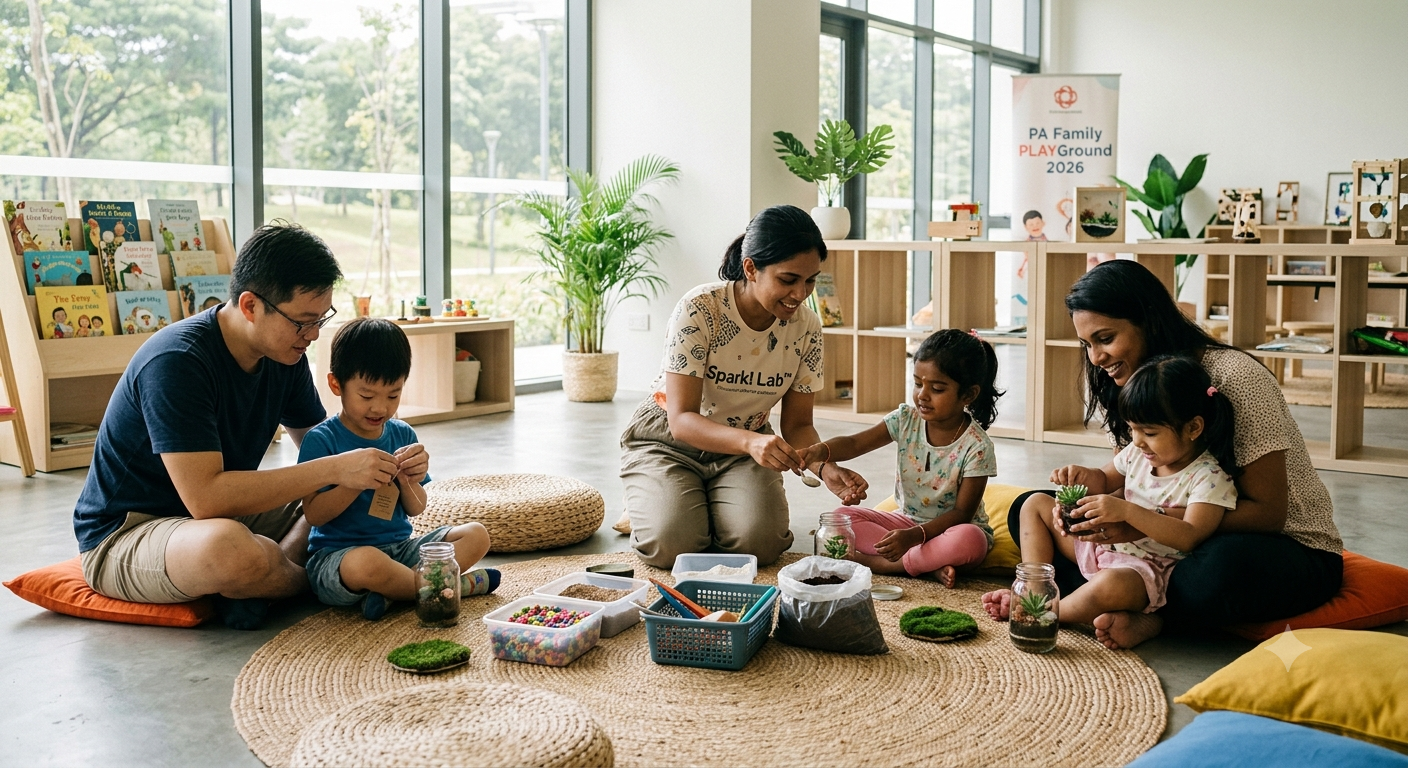
Young children often communicate through behaviour before they have the words to explain what they feel. The workshop is conducted in two parts so both parent and child receive meaningful support.
FIRST 45 MINUTES
Parent + Child + Facilitators
Families take part in a guided hands-on activity together — practising communication, cooperation, patience, and problem-solving. The aim isn’t a perfect finished product; it’s a real moment to understand your child through interaction, not instruction.
SECOND 45 MIN · PARENTS
With the Therapist
A guided group discussion reflecting on common family situations, emotional cues, and how to respond calmly and repair after conflict.
SECOND 45 MIN · CHILDREN
With the Facilitators
Children continue age-appropriate activities supporting expression, confidence, creativity, and social interaction.
WHAT YOU CAN GAIN
Real Tools, for Both of You
Every stage brings different emotional, developmental, and parenting needs. Our programmes are designed separately so your family gets support suited to where you are right now.
For Children
- Recognise and name emotions
- Express feelings and needs
- Cope with frustration with support
- Listen and take turns
- Ask for help and cooperate with others
- Build confidence
- Reconnect after difficult moments
For Parents
- Look beneath challenging behaviour
- Notice emotional, communication, and sensory cues
- Stay grounded before responding
- Use simple connection-based phrases
- Reduce repeated scolding and power struggles
- Build connection through everyday routines
- Apply practical strategies at home
THE FRAMEWORK BEHIND IT
Building Emotional Skills for Everyday Life
Our parent-child workshops are guided by the principles of Social and Emotional Learning (SEL).
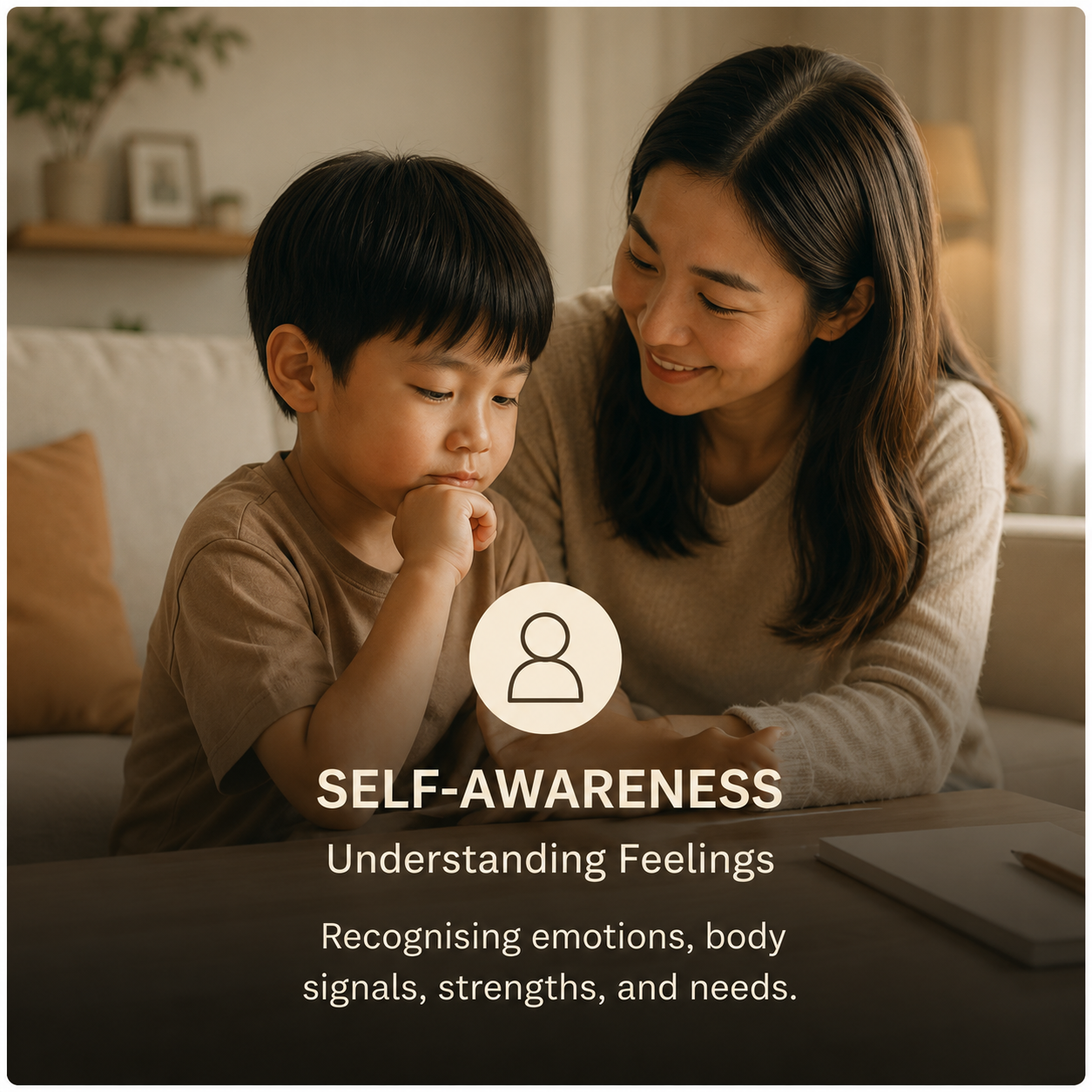
SELF-AWARENESS
Understanding Feelings
Recognising emotions, body signals, strengths, and needs.
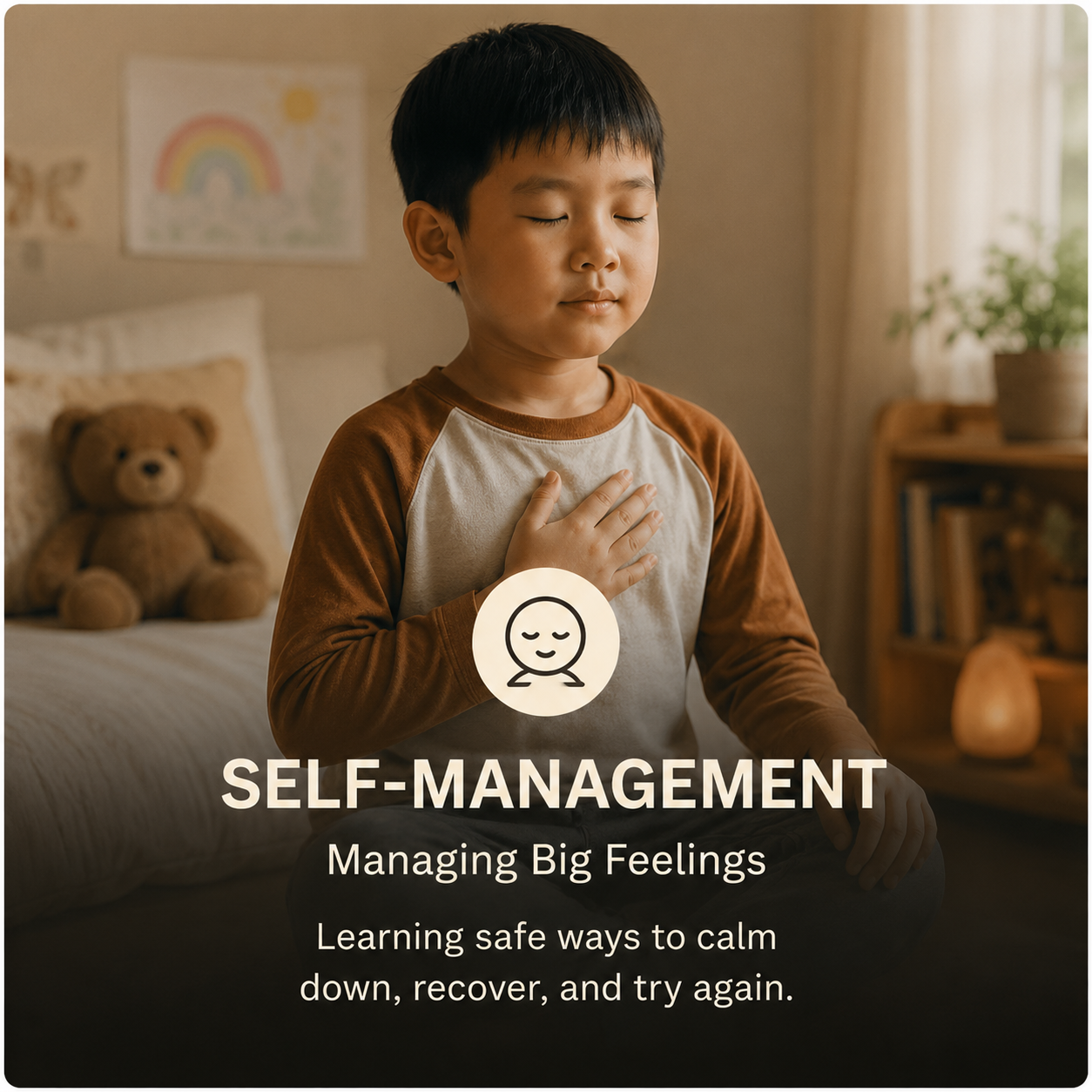
SELF-MANAGEMENT
Managing Big Feelings
Learning safe ways to calm down, recover, and try again.
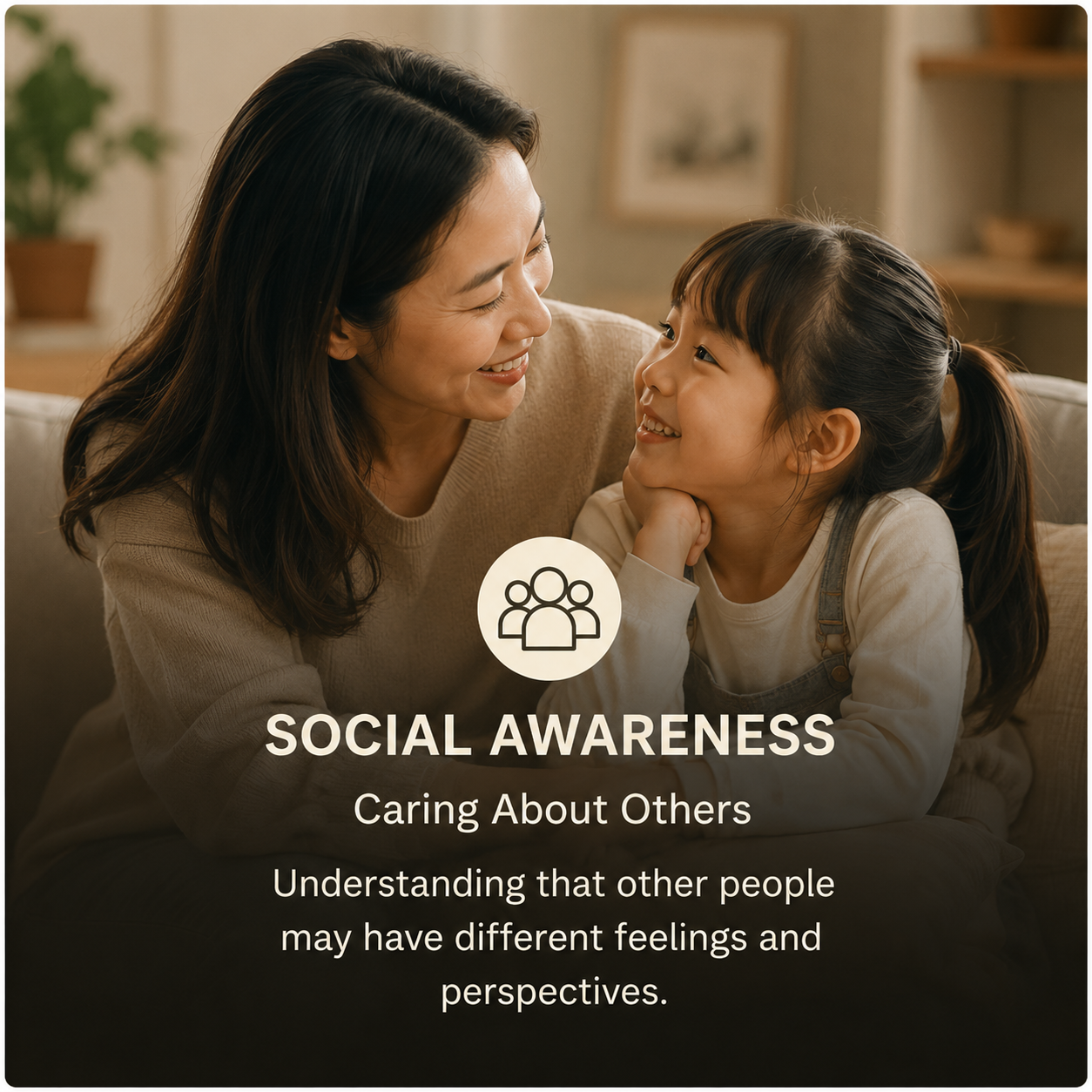
SOCIAL AWARENESS
Caring About Others
Understanding that other people may have different feelings and perspectives.
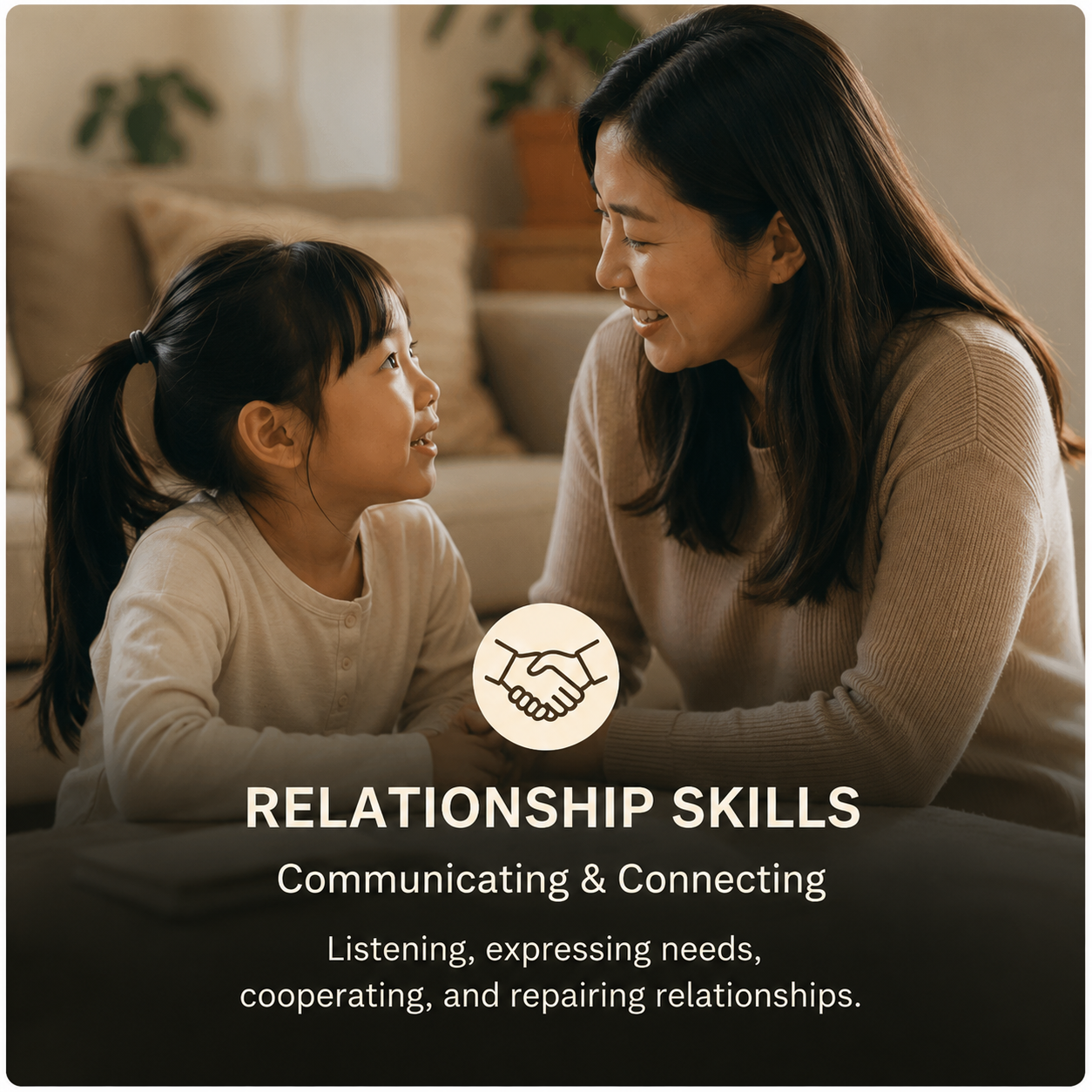
RELATIONSHIP SKILLS
Communicating & Connecting
Listening, expressing needs, cooperating, and repairing relationships.
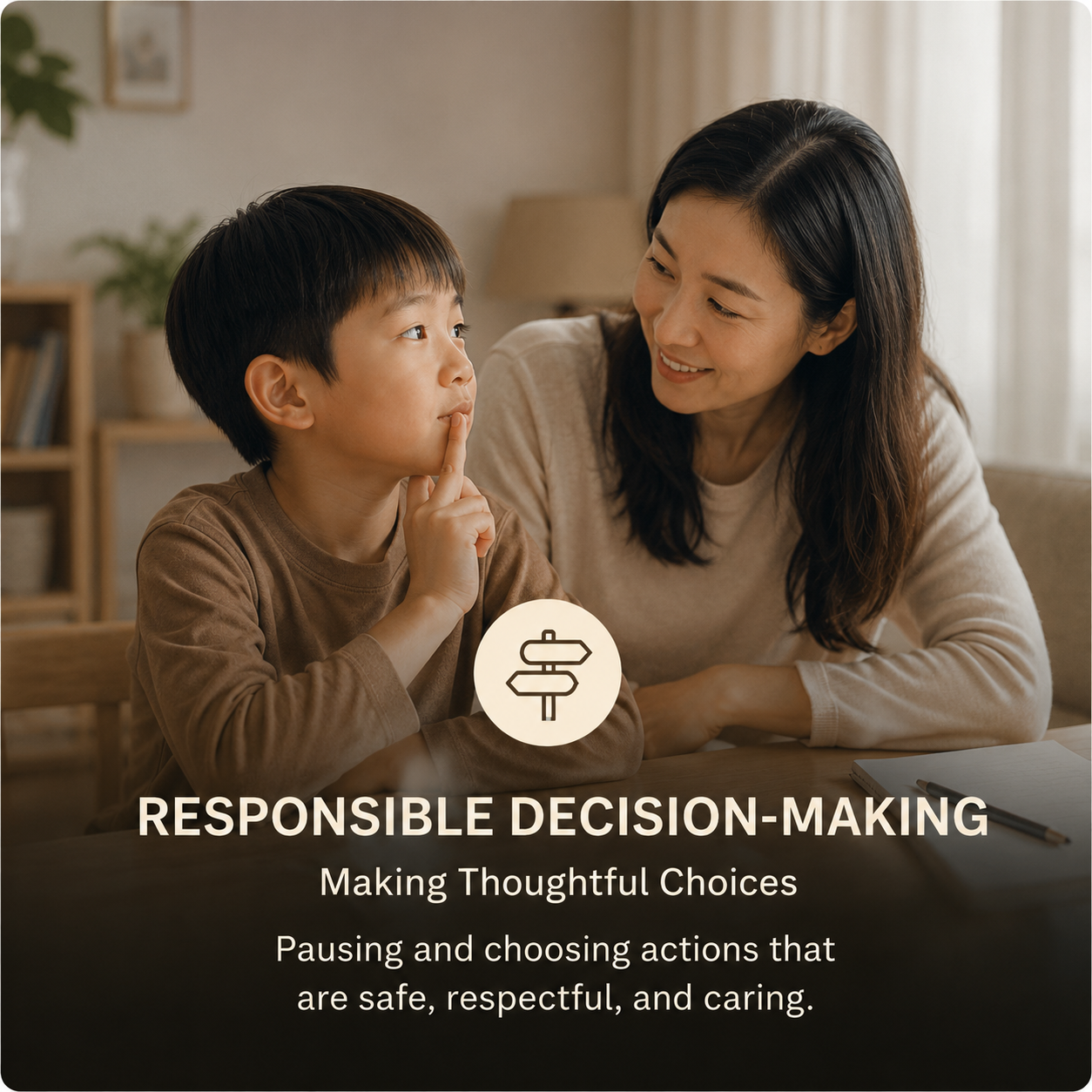
RESPONSIBLE DECISION-MAKING
Making Thoughtful Choices
Pausing and choosing actions that are safe, respectful, and caring.
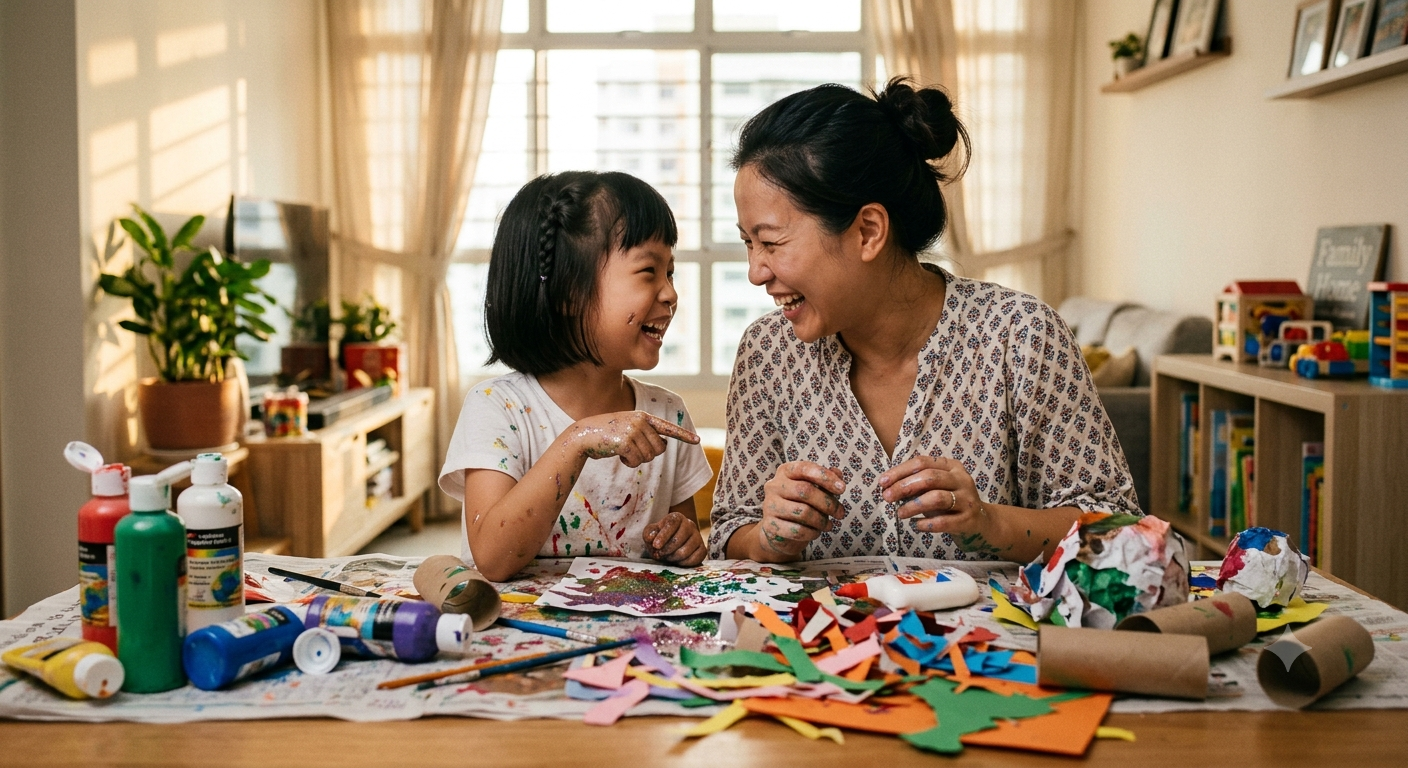
WHY SHARED ACTIVITIES MATTER
The Activity Is More Than Something to Complete
Children do not learn emotional skills only by being told what to do. They learn through repeated experiences of feeling safe, being understood, and receiving calm guidance from the adults around them.
The goal is not to create a perfect finished product. The goal is to understand one another better.
IS THIS FOR YOU?
Big Feelings, Strong Bonds May Be Suitable If:
- Your child experiences strong emotional reactions
- You’re unsure how to respond during challenging moments
- You want more meaningful time with your child
- You want to understand your child better
- Your child experiences strong emotional reactions
- You’re unsure how to respond during challenging moments
- You want more meaningful time with your child
- You want to understand your child better
You don’t need to wait until there’s a serious problem. This workshop is also for families who want to build healthier emotional habits and stronger connections early.
GUIDED BY A THERAPIST AND CHILD-FOCUSED FACILITATORS
You Are In Safe, Experienced Hands
Our parent-child workshops are delivered through a collaborative team approach.
The Therapist
Leads the parent discussion during the second half of the workshop — helping parents understand emotional needs, family interactions, and practical ways to respond during difficult moments. This discussion is educational and supportive; it is not a private therapy or assessment session.
The Facilitators
Guide the parent-child activity in the first half, then continue engaging the children through age-appropriate activities while parents meet the therapist — supporting communication, cooperation, confidence, and emotional expression throughout.
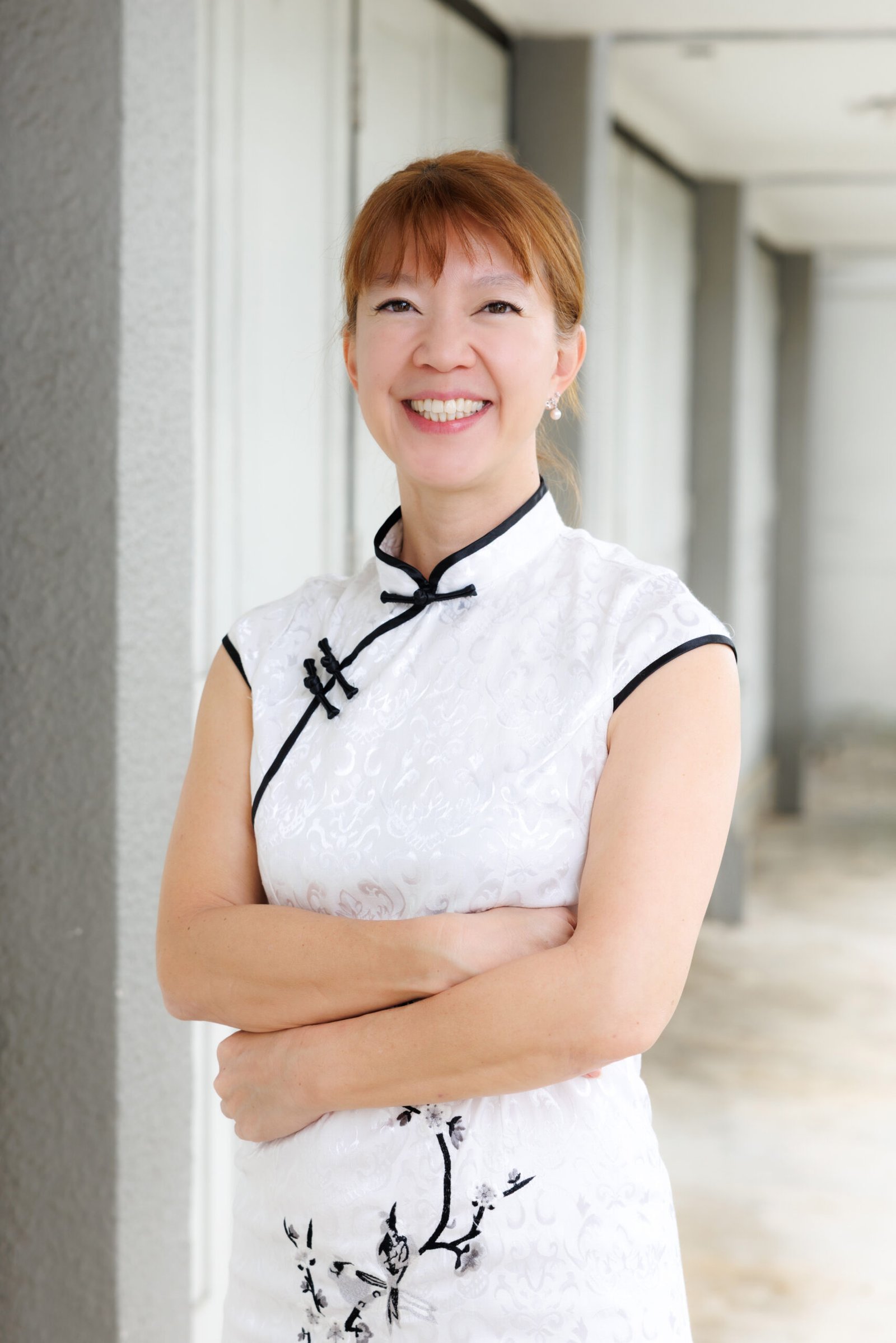
Li Anne
Founder & Principal
The Hideout SG
I believe children thrive best when they feel safe, understood, and supported by the adults around them. My work focuses on building strong partnerships with parents and educators to create calm, engaging learning environments where children can develop confidence, curiosity, and positive behaviour through consistent, well-structured early childhood practices.

Rodney
Social-emotional Learning Curriculum Lead
SAC Registered
My work centres on helping parents and young children feel safe, connected, and understood during the early years. I design social-emotional learning experiences that support emotional regulation, positive behaviour, and secure attachment, offering practical guidance that parents can apply naturally within everyday interactions.
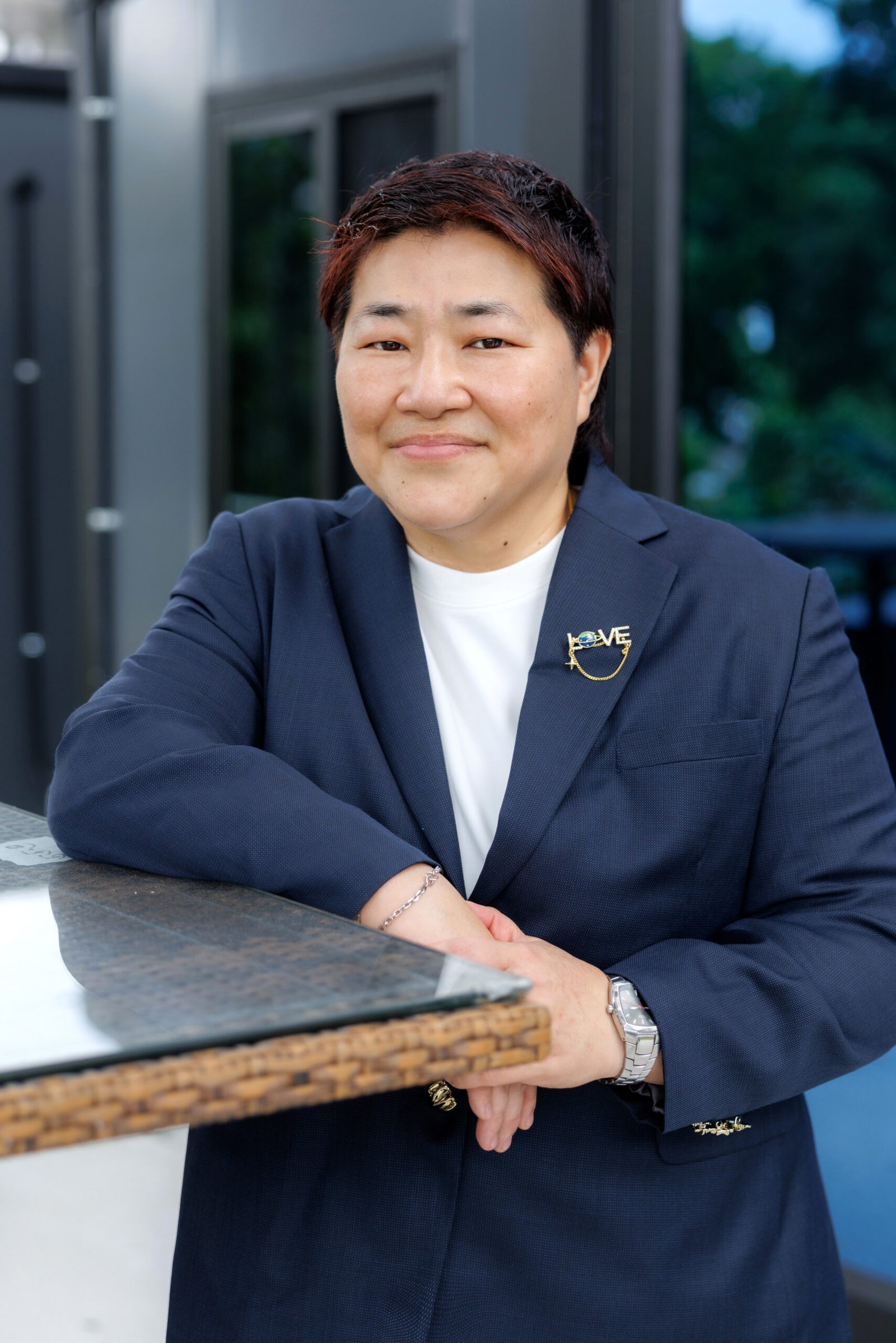
Justyne
Therapist / Facilitator
SAC Registered
As a therapist and facilitator, I support parents of youth in building steady, supportive relationships that help children navigate emotions and daily challenges with greater confidence. My approach is practical and structured, strengthening emotional regulation and functional skills in ways that can be carried into both family life and school environments.
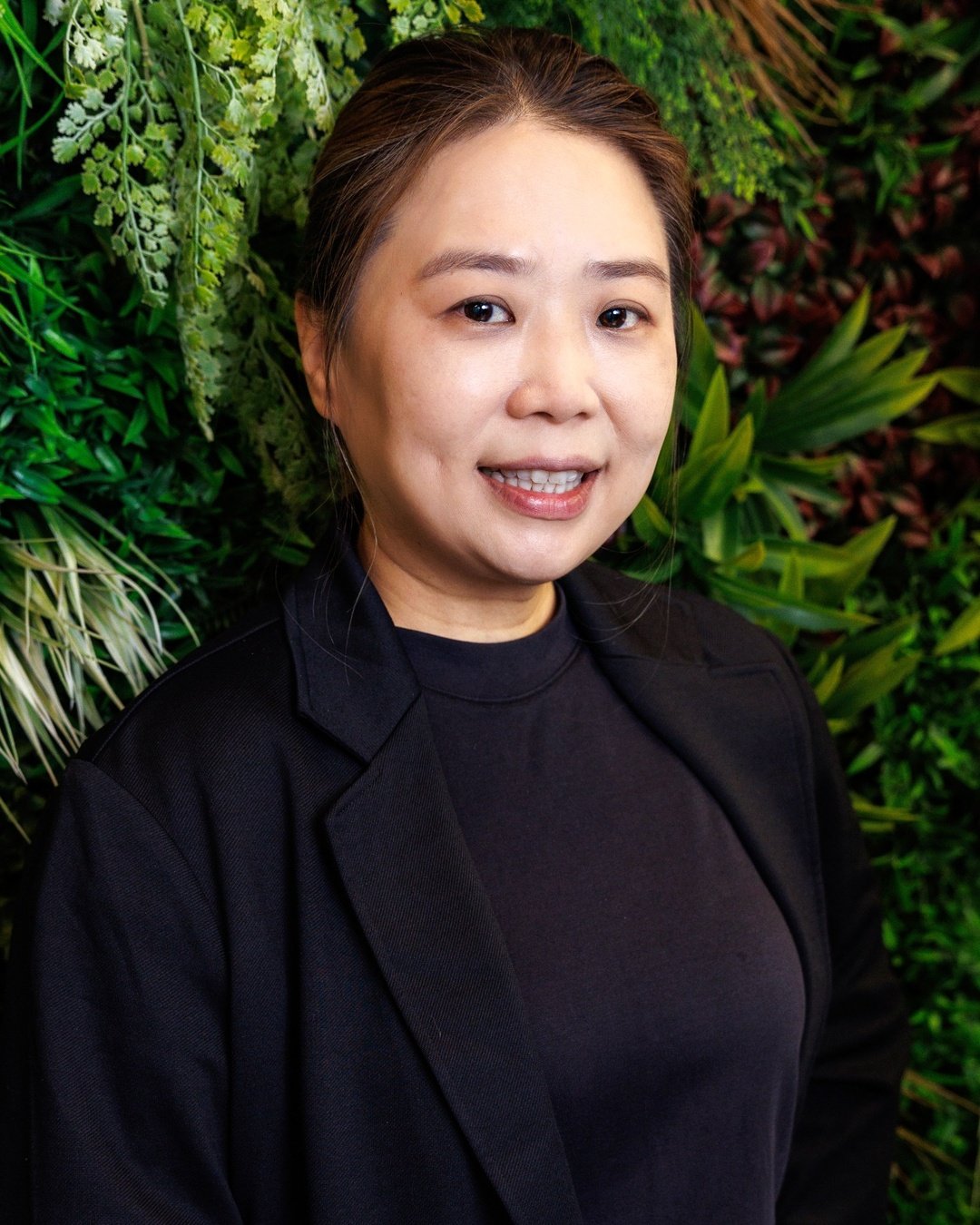
Cheryl
Workshop Facilitator
Robotics & Creative Learning
I believe children thrive best when they feel safe, understood, and supported by the adults around them. My work focuses on building strong partnerships with parents and educators to create calm, engaging learning environments where children can develop confidence, curiosity, and positive behaviour through consistent, well-structured early childhood practices.

Zi Ming
Baby | Infant Care - Parent Support Specialist
I believe the earliest months of caregiving are as much about supporting parents as they are about caring for babies. My work centres on helping parents make sense of their baby’s cues and rhythms, so daily caregiving feels calm and assured. By offering gentle, practical support, I partner with families in building trust, both in the parent–child relationship and in the parent’s own growing confidence.
SESSION DETAILS
Everything You Need to Know Before You Book
Growing Into Parenthood
| Suitable for | Newborn – 3 years |
| Duration | 60 minutes |
| Introductory fee | $15 / adult |
| Child attendance | Optional |
Big Feelings, Strong Bonds
| Suitable for | Ages 4 – 7 |
| Duration | 90 minutes |
| Introductory fee | $25 / pair |
| Group Size | Max 8 pairs |
| Child attendance | Required |
Growing Through Big Changes
| Suitable for | Ages 8 – 12 |
| Duration | 90 minutes |
| Introductory fee | $25 / pair |
| Group Size | Max 8 pairs |
| Child attendance | Required |
REAL FAMILIES, EVERYDAY CHANGES
What Parents Are Saying
★★★★★
“After the workshop, I understand my son’s emotions so much better. Our mornings are calmer, and he’s more open with me.”
Clara, Mother of a 5 year old
★★★★
“I loved learning alongside my daughter. I learned to listen beyond words and hear my child’s heart.”
James, Father of a 4 year old
★★★★★
“The teachers were so warm and patient. They reminded me that connection always comes before correction.”
Brian, Father of a 4 year old
★★★★★
“The therapist’s discussion helped me understand why my child reacts strongly during transitions. I left with practical ideas I could try at home.”
Emily, Mother of a 7-year-old
REAL FAMILIES, EVERYDAY CHANGES
Before You Reach Out — A Few Answers
Programme Details
Which programme is right for my child's age?
Growing Into Parenthood suits newborn to 3 years and is parent-focused. Big Feelings, Strong Bonds is for children ages 4 to 7 and requires the child to attend with a parent. Growing Through Big Changes supports families with children ages 8 to 12. If you’re unsure, message us on WhatsApp with your child’s age and we’ll point you to the right fit.
Is this session free?
All three are introductory-priced sessions, not free — $15 per adult for Growing Into Parenthood, and $25 per pair for both Big Feelings, Strong Bonds and Growing Through Big Changes. This covers materials, facilitation, and the therapist-led discussion where applicable.
How long is each session, and how many people attend?
Growing Into Parenthood is 60 minutes. Big Feelings, Strong Bonds and Growing Through Big Changes are each 90 minutes, capped at 8 parent-child pairs, so every family gets real attention rather than a lecture-hall experience.
Content & Approach
Is the therapist providing therapy or an assessment?
No. The therapist-led discussion is educational and supportive, helping you understand common family situations and emotional patterns through a Social Emotional Learning (SEL) lens. It is not a private therapy session, diagnosis, or clinical assessment.
Do I need any background in psychology or parenting courses?
No — everything is explained in clear, everyday language with real-life examples. We focus on small, doable changes you can try at home immediately, even if this is your first parenting workshop.
Will this be a lecture, or will I get personal support?
It’s interactive — coaching, discussion, hands-on practice, and time for your questions. Small group sizes mean you can share your own situation and get guidance that fits your family, not generic advice.
Is this based on real research, or just general parenting advice?
Our approach follows Social Emotional Learning (SEL) principles and responsive-caregiving research — the same underlying ideas used in Singapore-based studies from A*STAR, NUS Medicine, and NUS FASS. See the Research section above for the specific studies.
Eligibility & Requirements
Does my child need to attend every session?
For Big Feelings, Strong Bonds, your child’s attendance is required — it’s a parent-child activity. For Growing Into Parenthood, your baby or toddler is welcome but not required to attend, since the session is parent-focused.
Can grandparents or a domestic helper attend instead of a parent?
Yes — any regular caregiver is welcome, since the goal is for whoever spends the most day-to-day time with your child to build these skills. Message us on WhatsApp to confirm details for your situation.
Booking
What if I need to miss a session, or want to see upcoming dates?
Message us on WhatsApp for the latest dates, times, and availability, and we’ll let you know your options if you need to miss a session.
How do I actually book a spot?
There’s no separate booking form — just message us on WhatsApp with your child’s age, and we’ll confirm the right programme, available dates, and next steps directly.
Stronger Relationships Are Built in Small Moments
“You do not need to be a perfect parent. Sometimes, one calmer response, one moment of understanding, or one shared experience can begin to change how you and your child connect.”
The Hideout Singapore — Understand feelings. Build connection. Grow together.